Launch offer — valid today only

Review for the ISA Certified Arborist Exam One Topic per Page, Always in the Same Order With Every Concept Drawn Step by Step!

The 10 exam domains, one topic per page: tree biology, ID, soils, pruning, diagnosis, construction, tree risk and safe work. 66 drawn pages + 2 bonus books. 66 illustrated pages.

GET THE DRAWN STUDY GUIDE

🔒 Secure checkout · PDF by email · 30-day guarantee

One topic per pageOne topic per page, every concept drawn
66 illustrated pages66 drawn pages in 11 parts
Up-to-date sourcesISA Program Guide (2025), OSHA and university Extension sources

This Is What the Pages You Will Study Look Like

One topic per page, the drawing that shows you how it works, and the boxes with what you need to know:

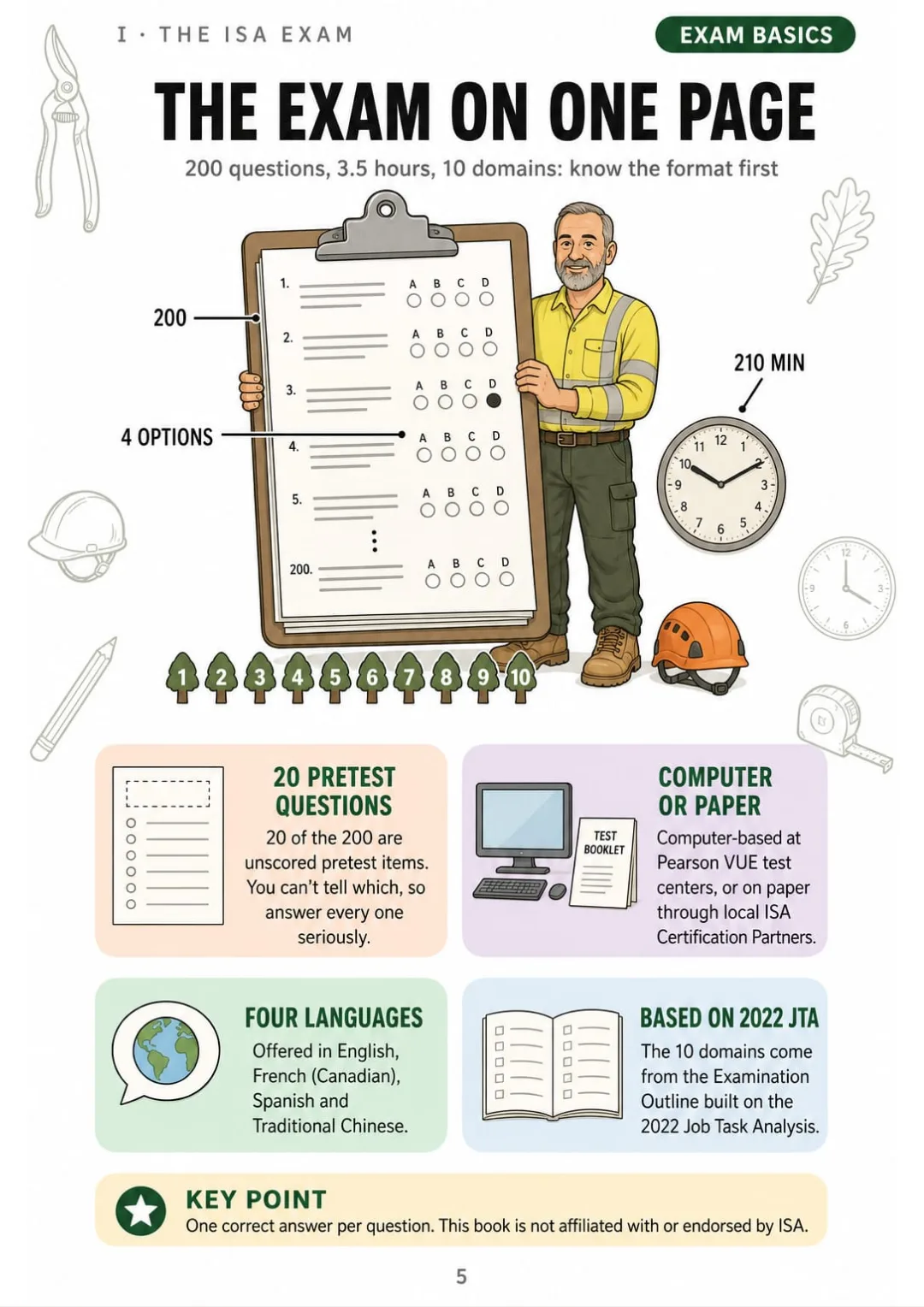
200 multiple-choice questions, 210 minutes, 10 domains, 20 unscored pretest items
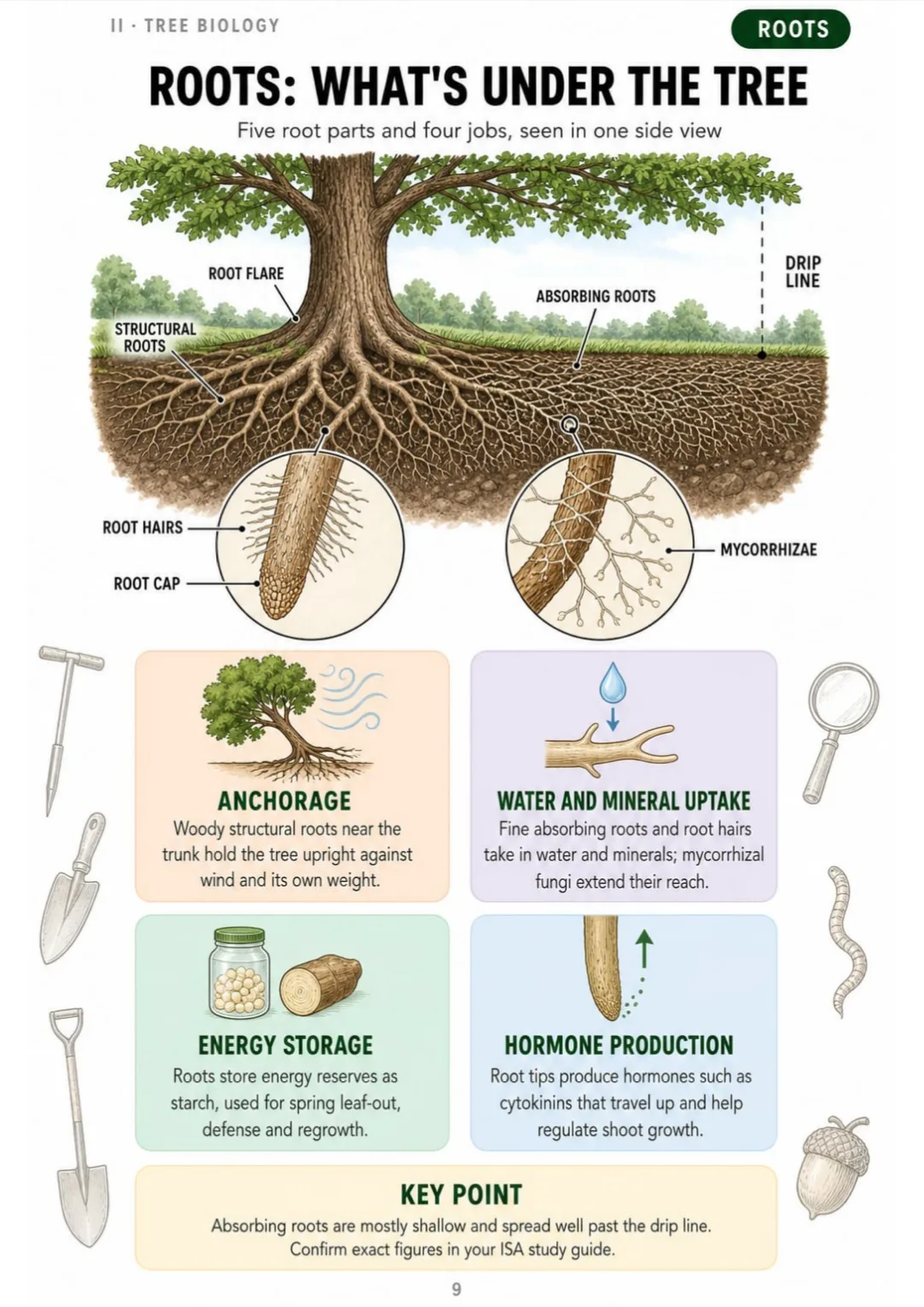
Root flare, structural roots, absorbing roots, root cap and mycorrhizae: four jobs on one page
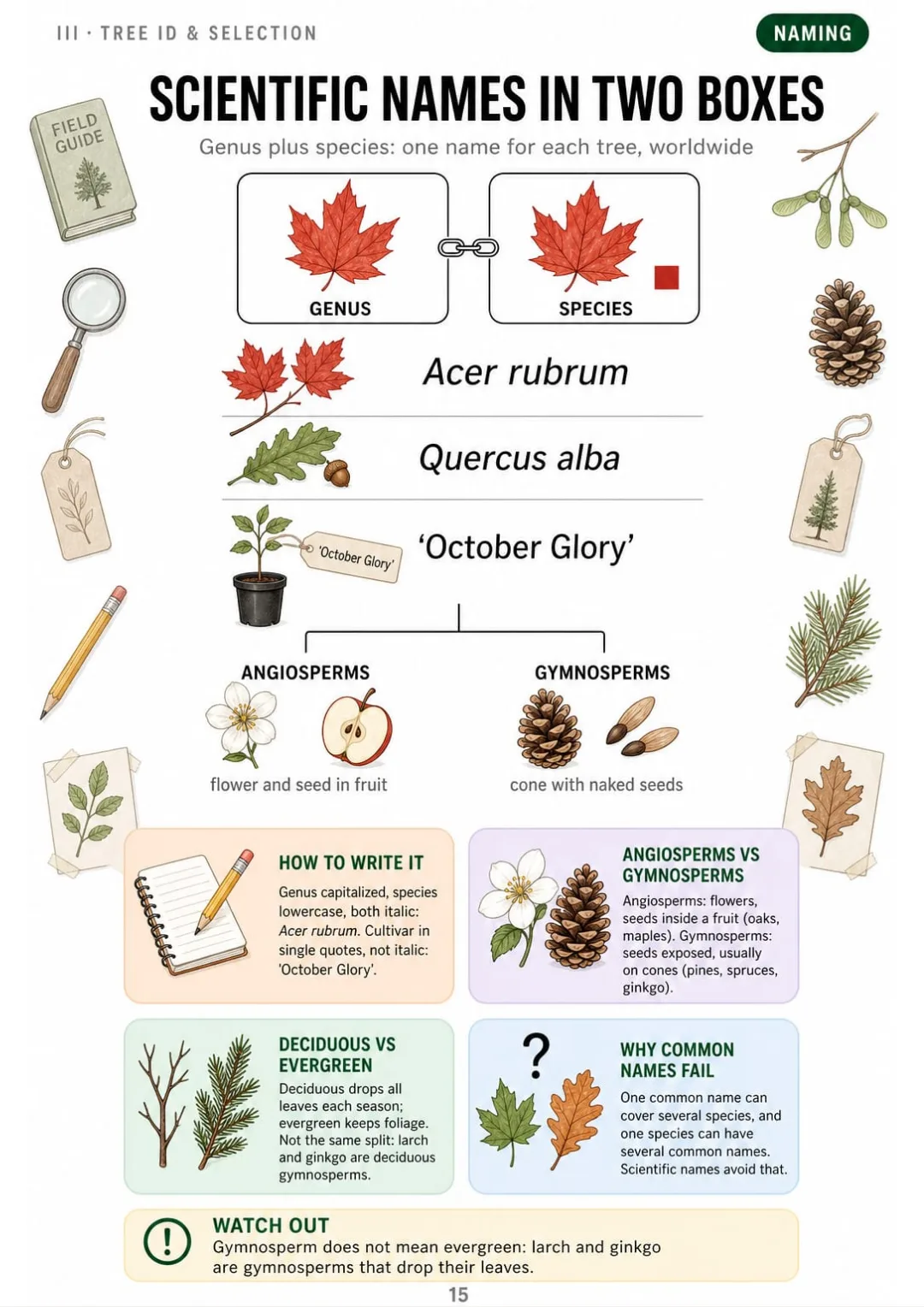
Acer rubrum, Quercus alba and 'October Glory': genus, species and cultivar drawn as boxes.
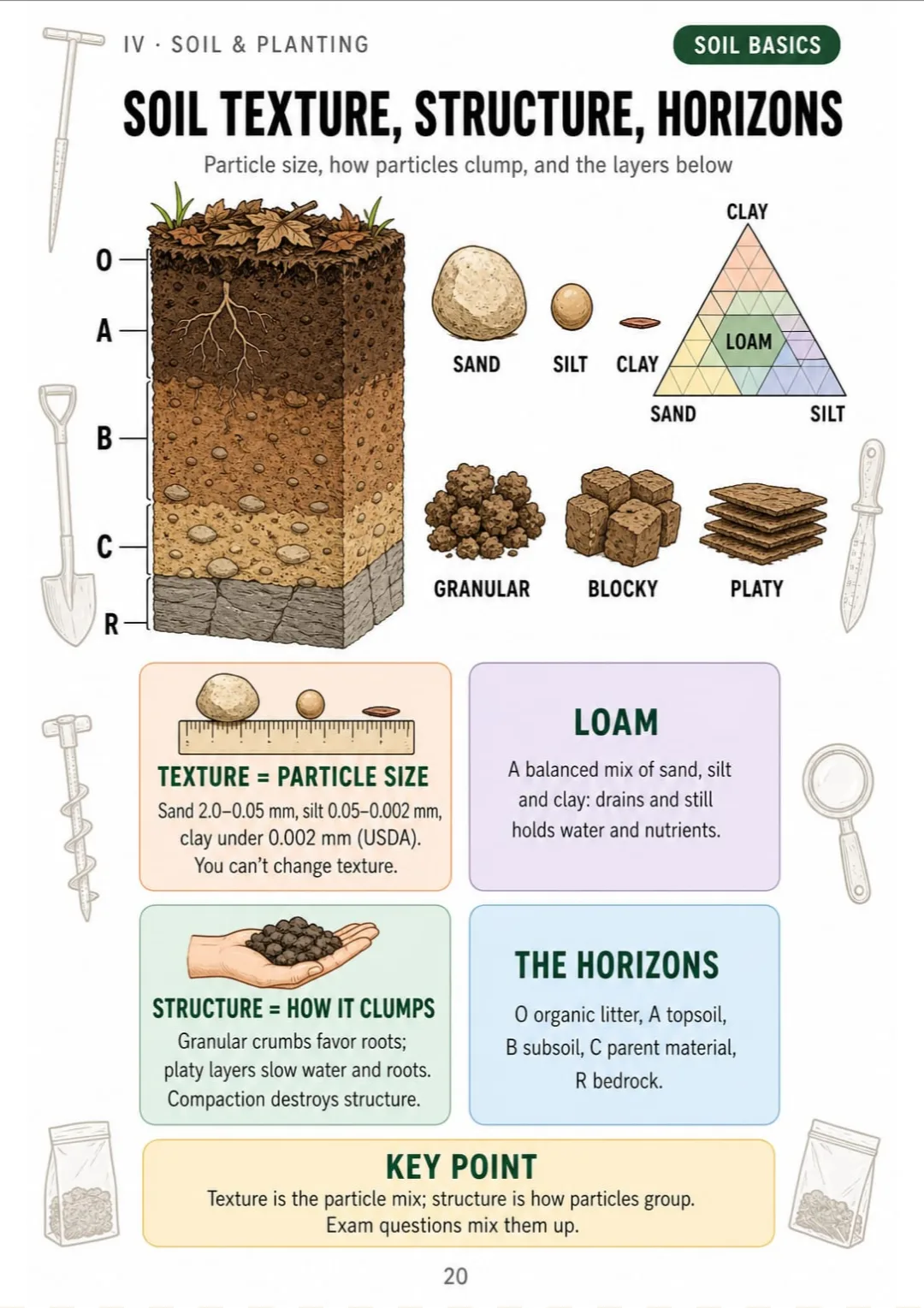
Sand, silt and clay to scale, three aggregate types and the O-A-B-C-R soil profile.
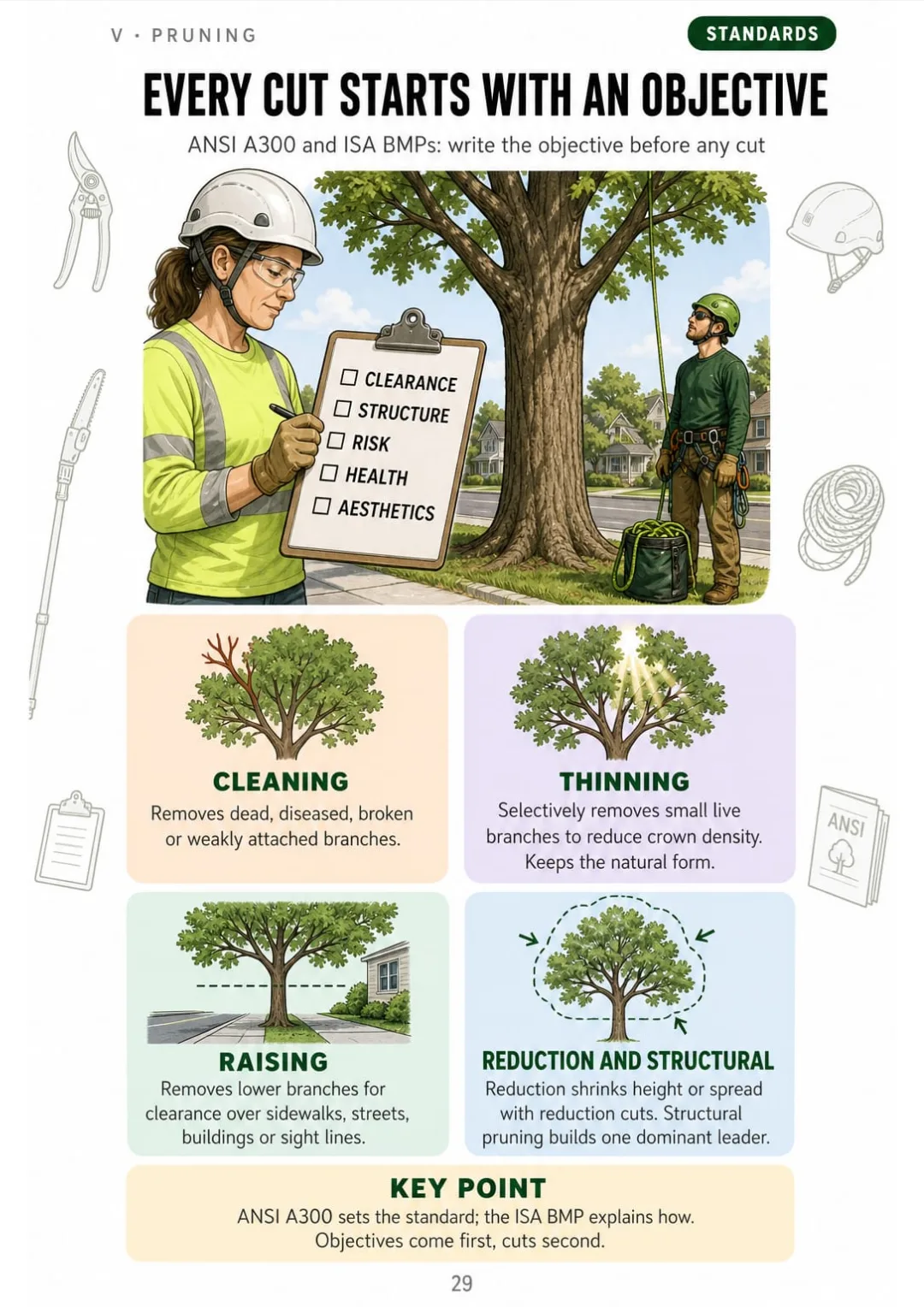
Four pruning types and the written objective ANSI A300 asks for before any cut
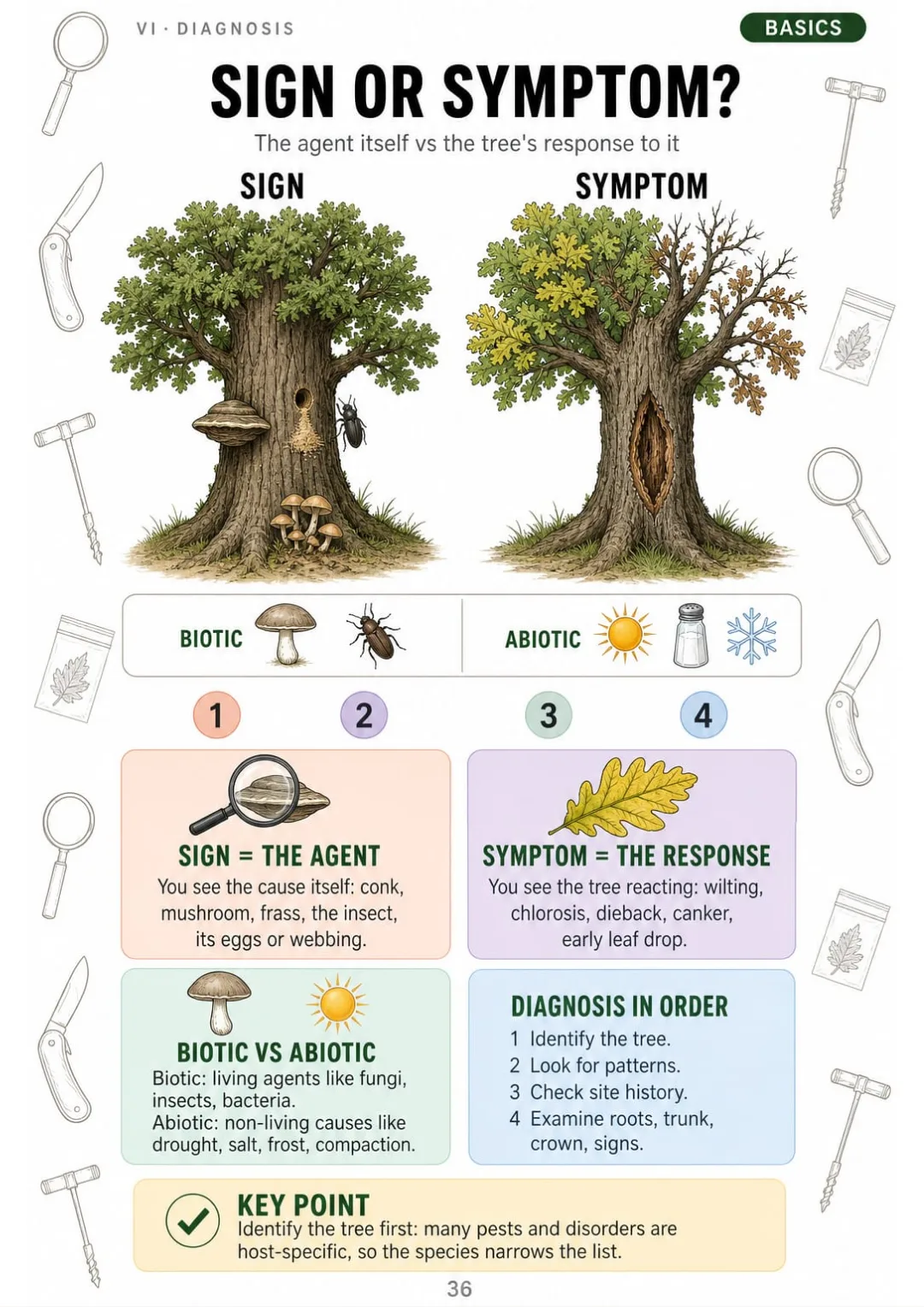
Sign vs symptom, biotic vs abiotic, and the diagnosis flow in 4 steps
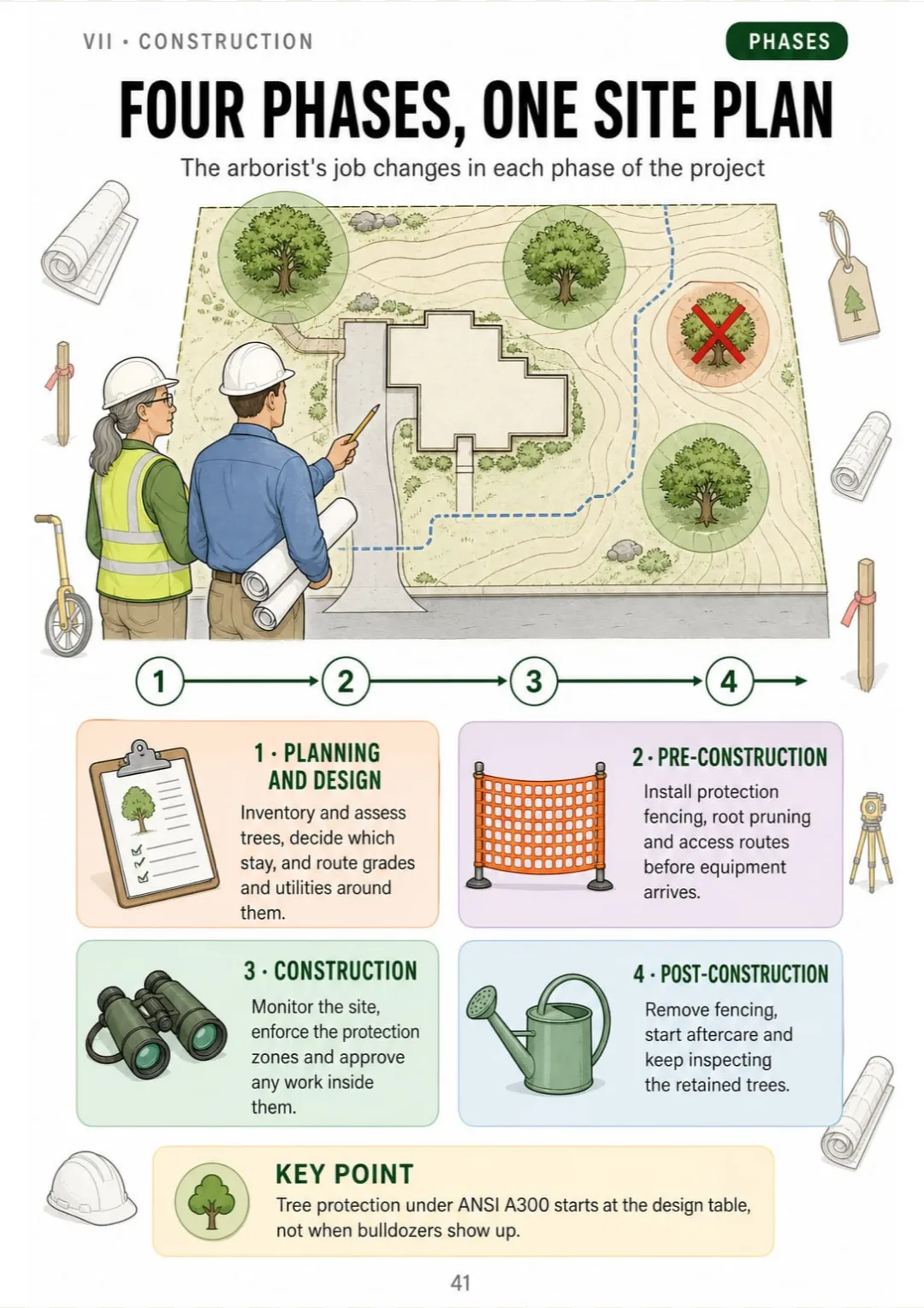
Planning, pre-construction, construction, post-construction: the arborist's role in each, per ANSI A300.
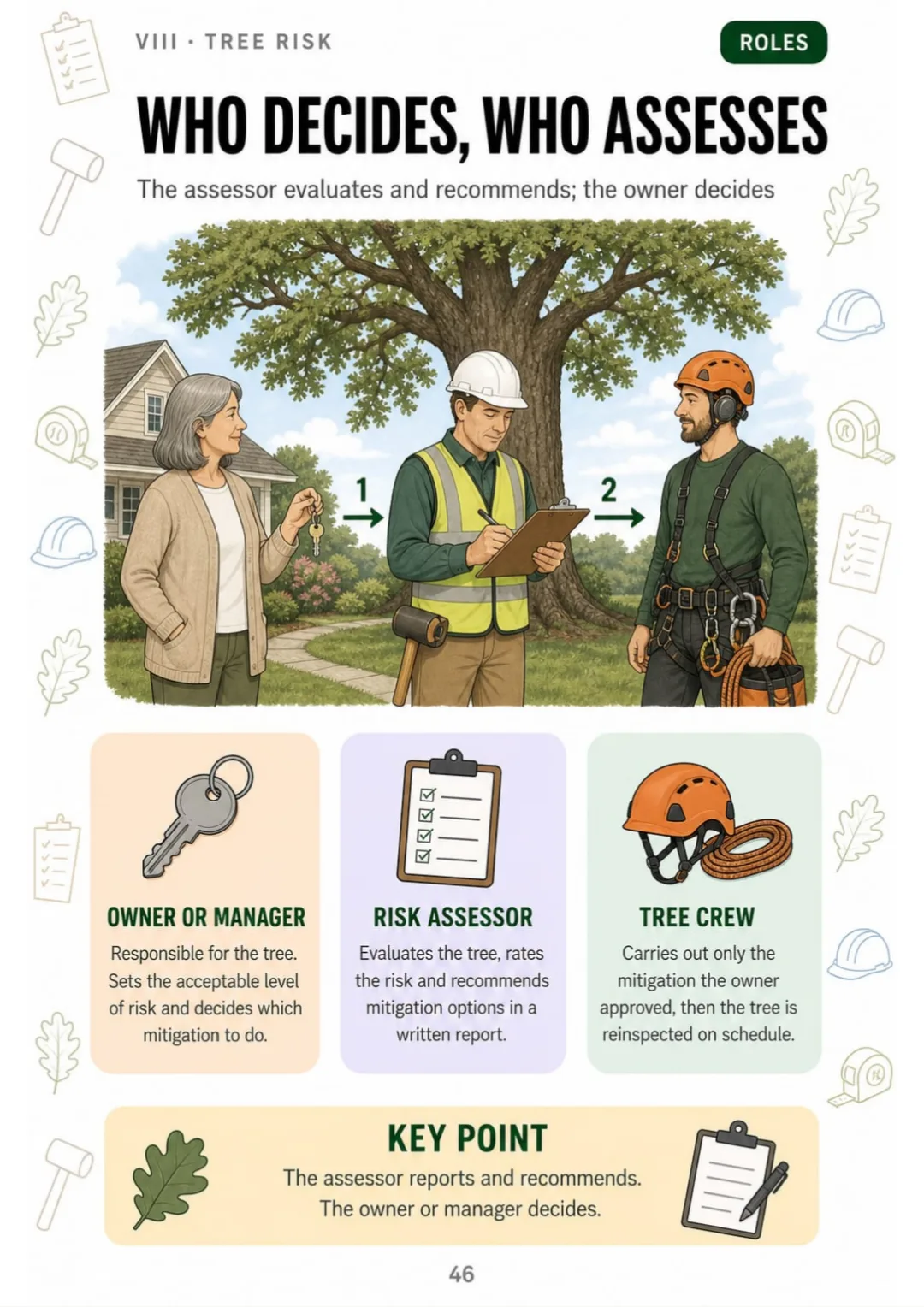
Owner or manager decides · assessor evaluates and recommends in writing · crew does the approved work

Swipe to see more →

These are real pages from the book. The table of contents is the full one: 11 parts and 62 topics.

It's That Nobody Put It in Order for You.

You've read the part on scientific names three times. You close the study guide...

...and you can't remember which word is the genus, which is the species, or where 'October Glory' goes. It was just one line after another.

Acer rubrum, Quercus alba and 'October Glory': genus, species and cultivar drawn as boxes.

Here, scientific names are one page of boxes: Acer rubrum split into genus and species, Quercus alba next to it, and the cultivar 'October Glory' in its own box, in quotes.

And on the pages next to it, every topic gets its own: twigs and buds, leaf arrangement, silhouettes, keys and field guides, and right tree, right place.

First you understand why it's written that way. Then the order sticks on its own.

SEE THE DIFFERENCE

Stop memorizing concepts you can't picture:

THIS
  • Page after page of dense text
  • Root systems without a single drawing
  • On exam day, you don't know where to start
The root system of a tree consists of structural and absorbing components. The root flare, located at the base of the trunk where it widens at grade, transitions into the large structural roots, which provide anchorage and storage and extend laterally, primarily within the upper soil layers. Fine absorbing roots are responsible for the uptake of water and mineral elements, frequently in a mutualistic association with mycorrhizal fungi, while the root cap protects the meristematic tissue at the root tip as it grows through the soil.
FOR THIS
  • Every concept drawn
  • One topic per page, with the rules in boxes
  • You remember it because you've seen it
Root flare, structural roots, absorbing roots, root cap and mycorrhizae: four jobs on one page
CONTENTS

Take a Look at the 11 Parts and 62 Topics

The exam, tree biology, identification, soils and installation, pruning, diagnosis, construction, tree risk, safe work practices, urban forestry and a final review: 66 pages, all drawn

IThe ISA Certified Arborist Exam · pp. 5-8
  1. What the Certified Arborist Exam Covers
  2. The Ten Domains and Their Weights
  3. Eligibility, Fees and Scheduling
  4. Scoring, Retakes and Recertification
IITree Biology · pp. 9-14
  1. Roots: Anatomy and Function
  2. Trunk, Branch, Twig and Leaf Anatomy
  3. Photosynthesis, Respiration and Energy
  4. Water Movement and Transpiration
  5. CODIT: How Trees Wall Off Decay
  6. Life Cycle, Phenology and Response Growth
IIITree Identification and Selection · pp. 15-19
  1. Classification and Scientific Names
  2. Twigs, Buds and Leaf Arrangement
  3. Leaves, Flowers, Fruits and Silhouettes
  4. Using Keys, Field Guides and Samples
  5. Right Tree, Right Place
IVSoil Management and Tree Installation · pp. 20-28
  1. Soil Texture, Structure and Horizons
  2. Soil pH, CEC and Nutrients
  3. Soil Water, Drainage and Irrigation
  4. Urban Soils, Mulch and Fertilization
  5. Nursery Stock Types and Quality
  6. Planting Hole Depth and the Root Flare
  7. Wraps, Wire Baskets and Circling Roots
  8. Mulch, Water and Staking After Planting
  9. Young Tree Care and Transplanting
VPruning · pp. 29-35
  1. Pruning Standards and Objectives
  2. Branch Collar and Branch Bark Ridge
  3. Removal, Reduction and Heading Cuts
  4. The Three-Cut Method
  5. Pruning Young Trees for Structure
  6. Mature Trees and Pruning Systems
  7. Topping, Lion-Tailing and Flush Cuts
VIDiagnosis and Treatment · pp. 36-40
  1. Signs vs Symptoms, Biotic vs Abiotic
  2. Insects, Mites and Other Pests
  3. Tree Diseases and the Disease Cycle
  4. Abiotic Disorders and Stress
  5. Plant Health Care and IPM
VIITrees and Construction · pp. 41-45
  1. Construction Phases and Site Plans
  2. Tree Protection Zone and Critical Root Zone
  3. Root, Trunk and Soil Damage
  4. Fencing, Root and Soil Protection
  5. Treating Construction-Damaged Trees
VIIITree Risk · pp. 46-51
  1. Roles in Tree Risk Management
  2. Levels of Tree Risk Assessment
  3. Targets, Site and Tree Analysis
  4. Cracks, Decay, Lean and Codominant Stems
  5. Cabling, Bracing and Support Systems
  6. Mitigation and Inspection Intervals
IXSafe Work Practices · pp. 52-60
  1. ANSI Z133 and Work-Zone Planning
  2. Job Briefings and Command-Response
  3. Electrical Hazards and Approach Distances
  4. PPE From Helmet to Boots
  5. Climbing Systems and Arborist Knots
  6. Rigging Hardware and Techniques
  7. Felling Notches and Removal Hazards
  8. Chainsaws, Chippers and Aerial Lifts
  9. Emergency Response and Aerial Rescue
XUrban Forestry · pp. 61-63
  1. Benefits of Urban Trees and Tree Value
  2. Ordinances and Tree Protection Laws
  3. Inventories and Management Plans
XIFinal Review · pp. 64-66
  1. Frequent Mix-Ups
  2. Key Numbers to Remember
  3. Exam Day Checklist

What If Every Topic Fit on a Single Page?

What if every topic fit on a single page?

Instead of rereading half a page about the root system without being able to see it...

...you open the page and find the root flare, the structural roots, the absorbing roots, the root cap and mycorrhizae drawn on one tree, each with its job.

Four pruning types and the written objective ANSI A300 asks for before any cut

And CODIT, soil horizons, pruning cuts, tree risk and electrical approach distances turn into drawings and tables you can read at a glance.

You stop repeating and start understanding.

That's exactly what The Certified Arborist Sketchbook does. It's not “just another manual.” It's 11 parts and 62 drawn topics, and at the end the frequent mix-ups, the key numbers and an exam day checklist. Because what your brain sees in order, it remembers.

Because what your brain sees organized, it remembers.

Here Is What You Get with The Certified Arborist Sketchbook:

Ipp. 5-8

The ISA Certified Arborist Exam

Walk in knowing the format: 200 questions, 210 minutes, the 10 domains and their weights, eligibility, scheduling, scoring, retakes and recertification.

IIpp. 9-14

Tree Biology

Roots, trunk, branch and leaf anatomy, photosynthesis, water movement, CODIT and how trees respond and grow.

IIIpp. 15-19

Tree Identification and Selection

Scientific names, twigs and buds, leaves, flowers and silhouettes, keys and field guides, and right tree, right place.

IVpp. 20-28

Soil Management and Tree Installation

Soil texture and horizons, pH and nutrients, drainage, urban soils, nursery stock, planting depth, the root flare and young tree care.

Vpp. 29-35

Pruning

Pruning standards and objectives, the branch collar, removal, reduction and heading cuts, the three-cut method and what not to do.

VIpp. 36-40

Diagnosis and Treatment

Signs and symptoms, biotic and abiotic causes, insects and mites, the disease cycle, stress and Plant Health Care.

VIIpp. 41-45

Trees and Construction

The four construction phases, tree protection zones, root and soil damage, fencing and treating damaged trees.

VIIIpp. 46-51

Tree Risk

Who decides and who assesses, the levels of assessment, targets, defects, cabling and bracing, and mitigation.

IXpp. 52-60

Safe Work Practices

ANSI Z133, job briefings, electrical hazards, PPE, climbing systems and knots, rigging, felling, equipment and aerial rescue.

Xpp. 61-63

Urban Forestry

The benefits and value of urban trees, ordinances and tree protection laws, and inventories and management plans.

XIpp. 64-66

Final Review

The frequent mix-ups, the key numbers to remember and an exam day checklist.

At the end of the book: Frequent mix-ups, key numbers and an exam day checklist.
And That Is Not All: 2 More Books, Free

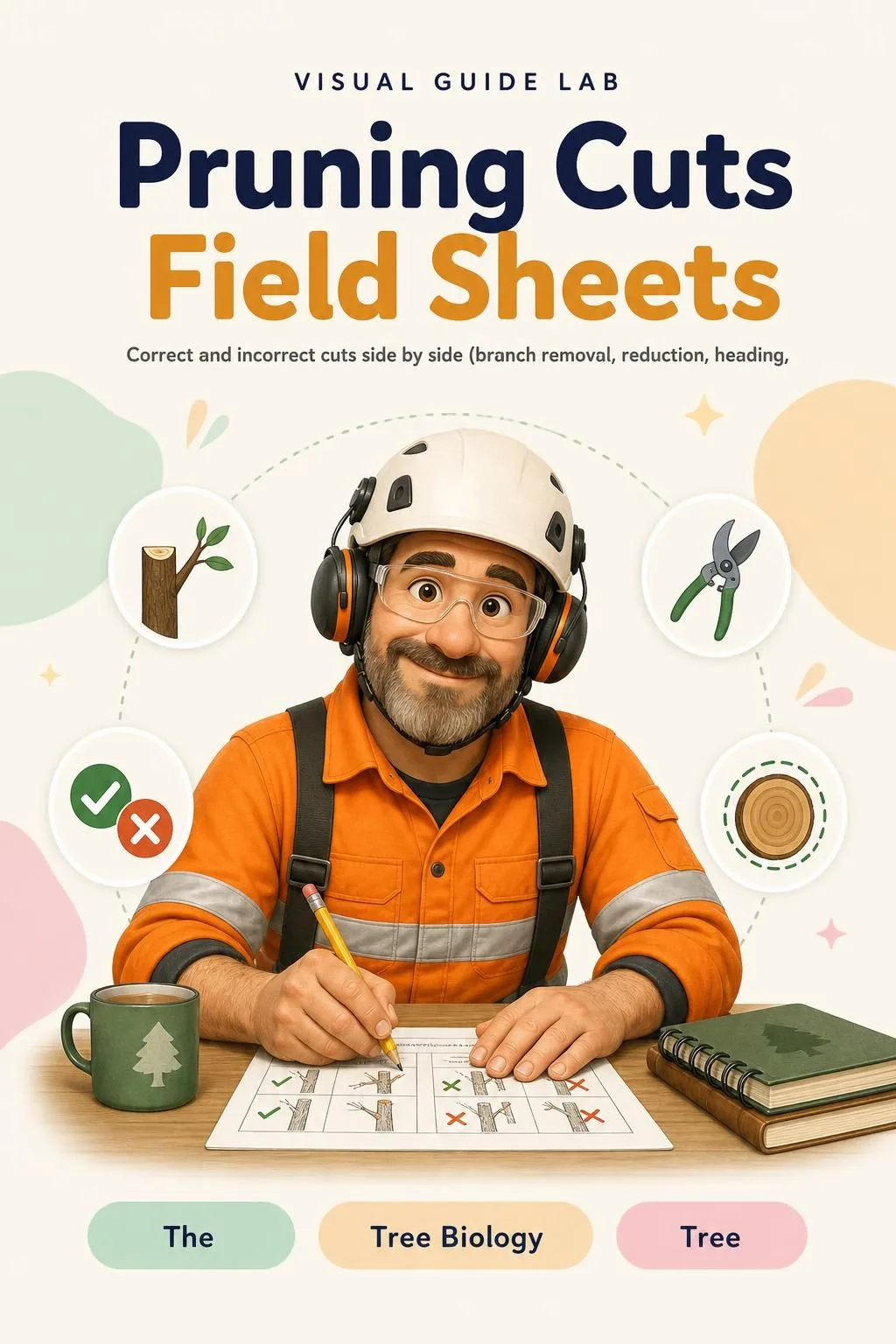
Pruning Cuts Field Sheets

BONUS 1: «Pruning Cuts Field Sheets»

Value on its own: US$ 17.90

Correct and incorrect cuts side by side (branch removal, reduction, heading, flush, stub), each with a tiny sketch, so you can spot the wrong cut in a second. Printable for the truck or your desk.

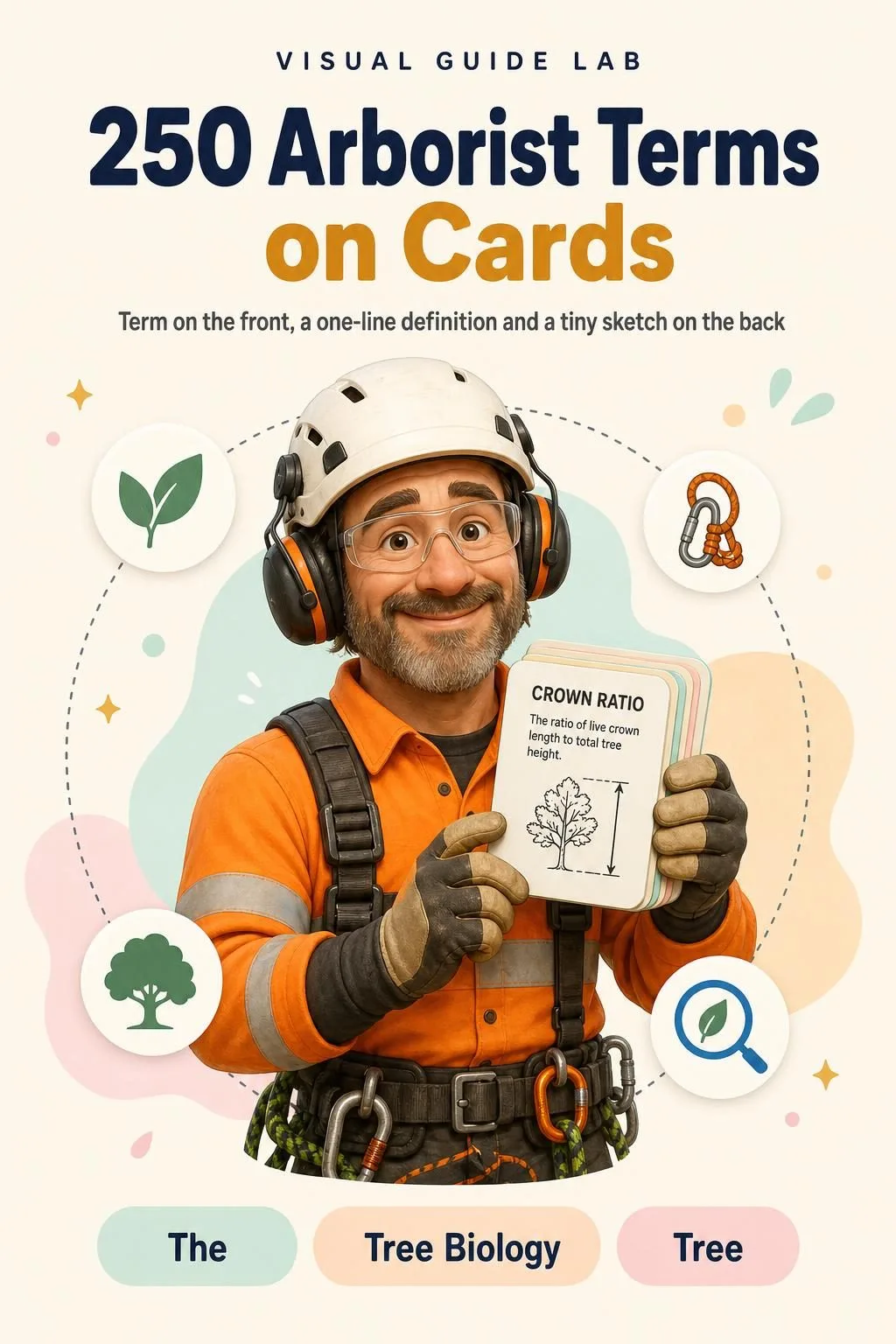
250 Arborist Terms on Cards

BONUS 2: «250 Arborist Terms on Cards»

Value on its own: US$ 14.90

Term on the front, a one-line definition and a tiny sketch on the back: review vocabulary in short sessions between jobs and fix frequent mix-ups before exam day.

The Certified Arborist Sketchbook + 2 Free Books

  • The Certified Arborist Sketchbook: 66 illustrated pagesUS$ 63
  • BONUS 1: Pruning Cuts Field SheetsUS$ 17.90
  • BONUS 2: 250 Arborist Terms on CardsUS$ 14.90
  • High-resolution PDF to printIncluded
Total value US$ 95.80
YOUR PRICE:
US$ 27
You save US$ 68.80
YES, I WANT THE CERTIFIED ARBORIST SKETCHBOOK FOR US$ 27

📄 This is a digital PDF book sent to your email: nothing is printed or shipped.

Secure purchaseEncrypted payment30-day guarantee

PDF by email: The Certified Arborist Sketchbook reaches your inbox as a PDF, and the two free books come by email too. One-time payment, no installments or hidden costs.

Is This Book for You?

You're studying for the exam

You're studying for the exam

The 10 domains in order, one topic per page, to review at night after work without digging through the study guide.

Your exam date is set

Your exam date is set

A final pass through every domain, ending with the frequent mix-ups, the key numbers and an exam day checklist.
You've worked with trees for years

You've worked with trees for years

The theory behind what you already do with the saw: the branch collar, CODIT, the root flare and minimum approach distances to energized lines, drawn.

To Sum Up: Here Is What You Get

US$ 95.80US$ 27
YES, I WANT THE CERTIFIED ARBORIST SKETCHBOOK FOR US$ 27

📄 This is a digital PDF book sent to your email: nothing is printed or shipped.

30DAYS
GUARANTEE

30-Day Guarantee

30-day guarantee: tell us what didn't work and we'll refund 100%.

You have 30 days to try The Certified Arborist Sketchbook and the two bonus books. If it doesn't work for you, tell us what didn't work and we'll refund 100% of what you paid. One-time payment, no subscription.

Frequently Asked Questions

How do I get the material?

You get an email with The Certified Arborist Sketchbook as a high-resolution PDF, to read on your phone or print. The two bonus books, Pruning Cuts Field Sheets and 250 Arborist Terms on Cards, come by email too, to the address you enter at checkout.

Is it a monthly or one-time payment?

One-time payment of US$ 27. No installments, no subscription.

Who is it for?

For people who already work with trees and are preparing for the ISA Certified Arborist exam: crew leaders, groundskeepers, landscapers, nursery staff, climbers, and anyone retaking it. It's not a beginner course: it goes straight to what the exam asks, with the theory behind what you already do in the field. Check the table of contents above to see every topic.

What sources is it based on?

The ISA Certified Arborist Program Guide (revised August 2025) and the Examination Outline (Job Task Analysis 2022), cross-checked with OSHA 29 CFR 1910.333, ISA's treesaregood.org and Iowa State and Penn State Extension. Where a number isn't verified, the page tells you which official reference to check.

Is this official ISA material?

No. It's an independent study aid, not affiliated with or endorsed by ISA, ANSI or TCIA. It doesn't copy the official study guide, exam questions or standards text. Buying it doesn't give you a certificate or CEUs and doesn't register you for the exam: you apply and schedule through ISA.

Does it replace the study guide or hands-on training?

No. It's a drawn review to keep at hand alongside the official study guide, your training and your field experience.

Are the practice questions the real exam questions?

No. The book itself is a drawn review, and the two bonus books are field sheets and term cards. Practice questions come only in the optional Certified Arborist Practice Sets offered at checkout: 200 original questions written for this series and explained, not official questions from any exam.

Can I print it?

Yes. The PDFs are high resolution, so you can print the whole book or only the pages you want for the truck or your desk.

What if I don't like it?

You have 30 days. Tell us what didn't work and we'll refund 100% of what you paid.

One Last Thing Before You Decide...

You don't have to reread the same page hoping it sticks this time.

You don't have to memorize concepts you can't picture.

And you definitely don't have to walk into the exam not knowing where to start.

There's a simpler way, and it's one click away. Open the first page and see for yourself.

One-time payment: US$ 27 · Guarantee: 30 days · PDF by email

YES, I WANT THE CERTIFIED ARBORIST SKETCHBOOK FOR US$ 27

📄 This is a digital PDF book sent to your email: nothing is printed or shipped.